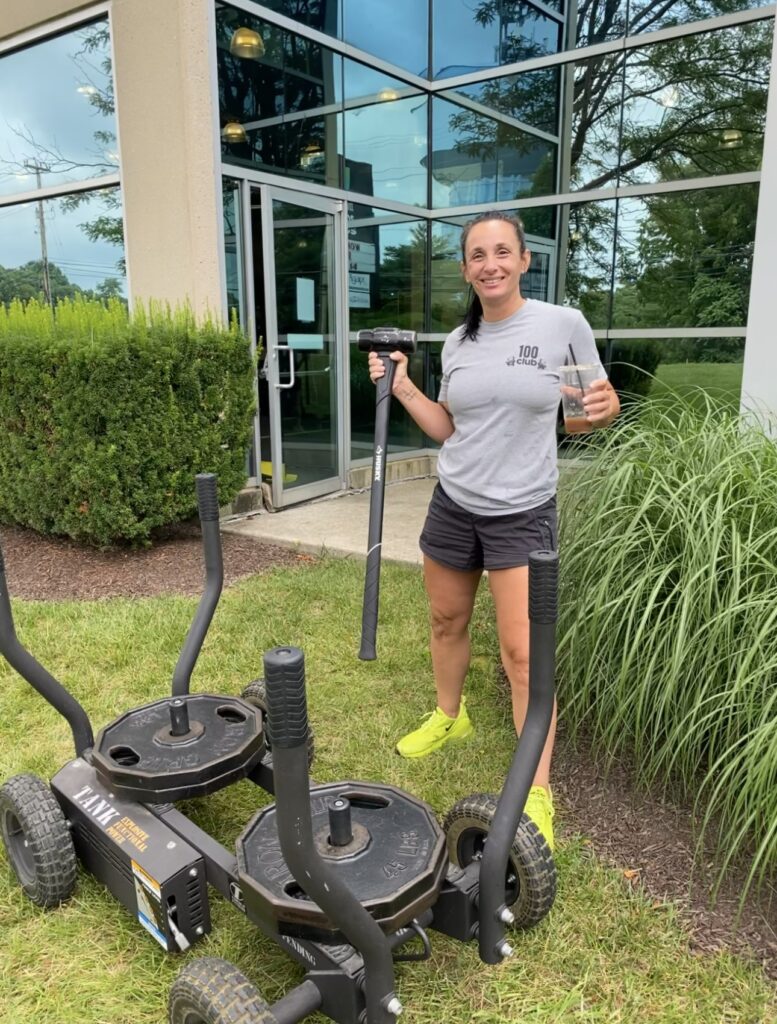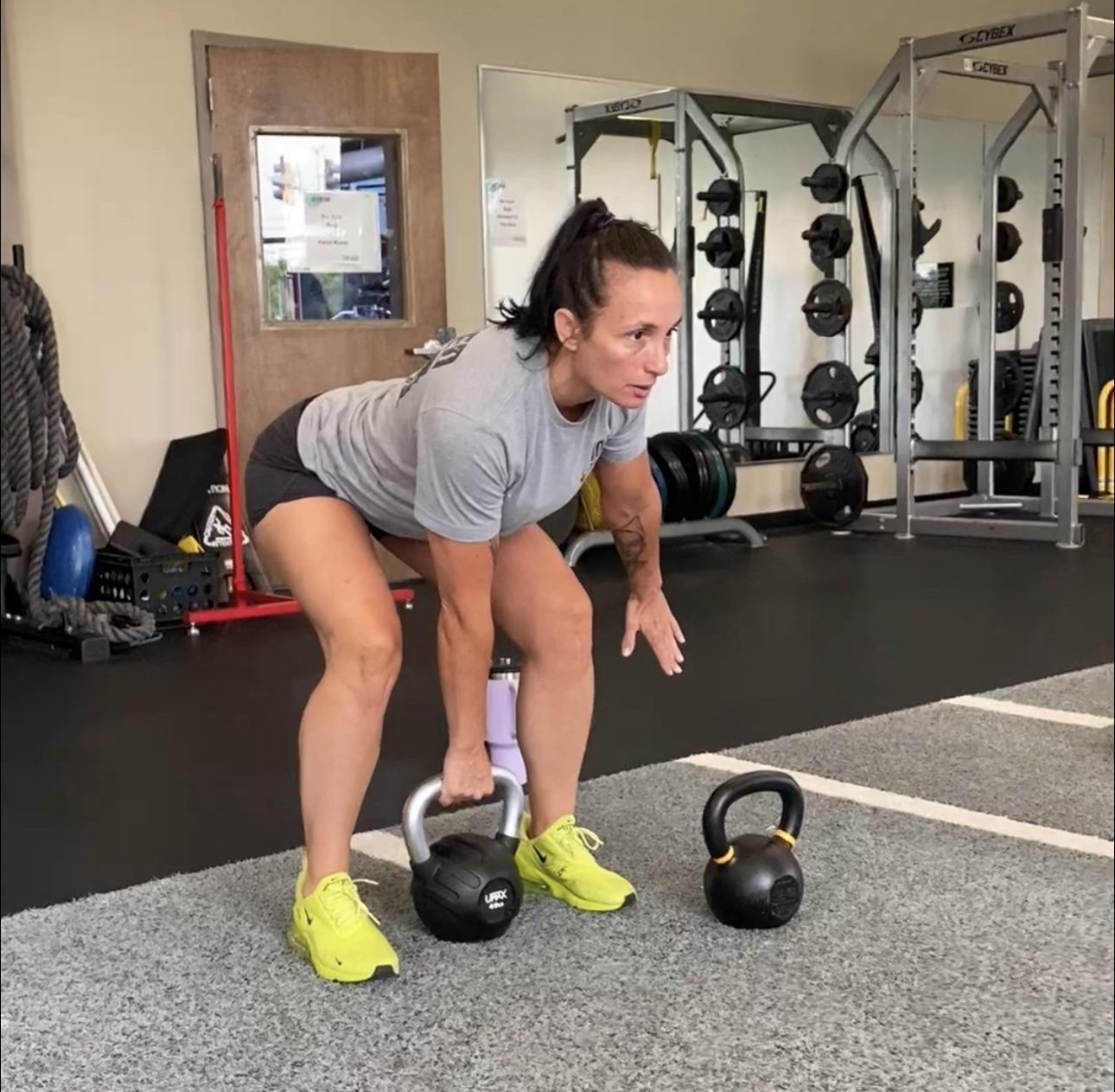
When pain gets in the way, it can be difficult to maintain a regular exercise program. Heidi Shaneybrook, Fitness Director at Merritt Clubs Eldersburg and Owings Mills, knows this all too well.
Being in sports her whole life, Heidi has been dealing with chronic pain since she was a young athlete. With multiple injuries and surgeries over her years including repair of both ACLs and both elbows, four screws put in her right shoulder, and partial disc removal of her L5/S1 spine, Heidi has had many starts and stops in her fitness journey. Recently diagnosed with lupus and rheumatoid arthritis, Heidi continues to adapt how fitness fits into her life.
Tell me about the transition from when sports felt easier, to now. How did that affect your relationship with fitness?
When it was easy, I was young, in the best shape of my life, and working out structurally with teams. When college ended and I had no structure or teams, it made it challenging for my motivation. Tearing my ACL the second time the summer after I graduated college was a big mental “screw-you” as I was trying to get my fitness back, because I knew I would never play soccer again after that.
What does your workout routine look like now?
It changes day-to-day depending on how I feel. If I’m already in a lot of pain or in fatigue, I’ll do pool therapy. I’ll put the running belt on and do running in the deep end. I’ll incorporate running, lateral movements, and high skipping in the shallow end after that.
On days I feel alright after my 20 minute mobility routine, it depends on what’s in my program. If I have an “A Day” and all those movements would feel good that day, I’ll do that, but if something feels flared up after my warm-up, I’ll swap it out for another day or do a rehab-based program instead.
How do you adapt on your bad days and when you have flare-ups?
I use my WHOOP a lot for my recovery. If I notice that I’m in the “red zone,” that day might literally just be stretching and mobility, or getting out and walking the dogs. But, if I don’t move, it makes it ten times worse. I use the WHOOP more for my sleep and recovery than the training part of it, since it gives me information about sleep and my HRV. I start every workout on the Hydro-Massage chair before I warm up.
As a fitness professional, what are some of your biggest takeaways from your journey with injuries and chronic pain?
I have a ton of empathy for people in pain, and with all that I’ve gone through, there’s so many people I can help start living the life they want to with chronic pain and injury. Going to physical therapy once a week for dry needling too has helped me become more educated on backs, necks, shoulders, elbows, knees… I can bring what I’ve learned from my physical therapist in here to help people deal with chronic pain and injuries.
What advice do you have for fit individuals who are dealing with chronic pain and needing to adjust how they participate in exercise?
Don’t stop moving. Work in the range of motion that’s less than a level 4 out of 10 pain level. Once you stop moving, it will get ten times worse. If your pain is above a 4 on a regular basis, consult a doctor. Listen to your body, don’t ignore what it’s telling you.